The journey from Mumbai started at 9:30 And there are so many people travelling around itself , either to Bangalore ,chennai or kashmir …where we are heading ,it’s supposed to be an economic down turn that our country is going through but it really doesn’t seems to be so or is it just an excuse by people not wanting to spend money.
So it’s 10:40 and time to board the flight .And the flight is full as we expected .
So the journey towards Srinagar begins and we could see so much of snow around the mountains .the top view was so beautiful that we couldn’t wait to get to our final destination (gulmarg)
So while we were passing Srinagar we wanted to have lunch and so first we went to a vegetarian restaurant but we wanted some authentic stuff so we went a little ahead and had authentic Kashmiri meal ,there were kebabs rice ,gravy of 3 different types and naan.It was such a heavy meal .
Also the restaurant were we ate are lunch made me feel like I was in Pakistan. Since I felt Pakistan would be like this after hearing the description the other day .
While travelling to gulmarg I also felt this what Pakistan might look like .
Also as we arrived to Srinagar there were so many cops,officials around stretching nearly a kilometre outside the airport.
So as we proceeded to our final destination gulmarg we reached a site just 15 km from where we had to go to change the taxi which had chains in tyre since it’s too slippery with the depth of snow
So the next 15 km took quite some time due to narrow lanes and plus the snow forced cars to be stuck .so while waiting in queue to move we witnessed slight snowfall. It was a feeling like we were abroad and not in India since both the sides had such heavy snow and completely white . it made us feel that only if Kashmir becomes more tourist friendly and developed it will be the best site India can offer to foreigners and give a run for its value for money
With space like a football ground for skiing ,activities like sledging ,snowboarding , It could just be the best winter tourism destination with xtreme winter tourism .
It’s just the arrival to gulmarg and the first day of our 4 day Kashmir holiday .
Author: Akhil Nanda
I am Still Trying To Write ...

Food photography or food porn.
Just read an article today . About a French chef who has been working at michelin star restaurants grenouillere restaurant la Madeleine
sousmontreuil
and so I shared this piece of news with a few people and there were of the opinion . No food porn should not be banned instead they are getting benefited since there are new clients who wish to dine there .But what is the reason behind these chefs being so irritated .While they say that food porn(photo clicking sharing on internet)takes away there intellectual property ,they fear of being copied and the surprise element that remain intact isn’t there anymore for there clients ,also there aim to create special moments for clients don’t remain special anymore
so are they right to ban food photography ?.They also argue the behaviour of people standing on chairs and clicking photos ,disturb the atmosphere and this behaviour also makes the food go cold .And there is nothing personalised left .
should this rule pass on here in India too?
like it.Share it.

What’s Next for Facebook?
Facebook’s acquisition of mobile messaging service WhatsApp for $19 billion in cash and stock, is by far Mark Zuckerberg-led company’s largest acquisition and bigger than any that Google, Microsoft or Apple Inc have ever done.
Facebook said it is keeping WhatsApp as a separate service, just as it did with Instagram, which it bought for about $715.3 million in two years ago.
Facebook has just acquired whatsApp for $19billion. Here is an social networking site which is a decade old and the other is a messaging app which is not even 5 years old,so that bring a question on my mind does Facebook want to take over the social world ? after even acquire Instagram almost two years ago .
quite similar to Facebook and here are the few similarities
You can block a number ,like a friend on Facebook
You can also update status here just like you do on Facebook
thats not all you can share photos,upload videos and change profile picture regularly
but the difference is its one of the most popular “messaging app”which is used instead of SMS in today time .
WhatsApp is available on free download on Android, BlackBerry, iPhone, Nokia, and Windows smartphones. All Android phones running the Android 2.1 and above, all BlackBerry devices running OS 4.7 and later, including BlackBerry 10, and all iPhones running iOS 4.3 and later.
Also a drawback of whatsApp is you can’t sent friend request like you do on Facebook as once somebody as your contact and whatsApp he can already view your profile the details like your ,status,pictures .Since you are on his/her contact and if you too are on whatsApp .WhatsApp Inc. was founded in 2009 by Americans Brain acton & Jan koum (CEO) who are ex-employees of Yahoo !
like it.Share it.

Lego movie
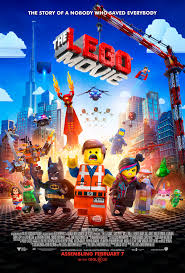
The film is based on the Lego line of Construction toys and was released on February 7, 2014.
the lego movie was a complete movie made with lego toys ,the lego city was really interesting and the characters were too made up with lego construction toys .the movie had a message and the movie made you just want to be part of the lego city ,with character like batman and superman made from lego made it more fun to watch ,also it was a animated action movie .
and last but not the least Everybody is awesome.
A 3D computer animated story follows Emmet, an ordinary, Discplined , perfectly average LEGO minifigure who is mistakenly identified as the most extraordinary person and the key to saving the world. He is drafted into a fellowship of strangers on an epic quest to stop an evil tyrant, a journey for which Emmet is hopelessly and hilariously underprepared.
like it.Share it.

History of Zumba!!!

Zumba is a dance fitness program created by Colombian dancer and Choreographer Alberto”Beto” Perez during the 1990s.
Zumba sessions are typically about an hour long.The exercises include music with fast and slow rhythms, as well as resistance training.The music comes from the following dance styles:Cumbia,Salsa,merengue,mambo ,flamenco ,chachacha,reggaeton, soca,samba,hip hop music ,axe music and tango . There are eight different types of classes for different levels of age and exertion.Zumba Toning is for the people who do their workouts with toning sticks. Zumba Toning will target the abs, thighs, arms, and other muscles throughout the body. Zumba Toning is adding sculpting of body and cardio.
In the 1990s, Beto Perez forgot his tape of aerobics music for a class he was teaching. He went to his car, listened to music – consisting of traditional Salsa and merengue music – and improvised a class using this non-traditional aerobics music. After finding initial success in Colombia, he moved to the United States in 2001, where he teamed up with cofounder Alberto Perlman and a childhood friend, COO Alberto Aghion. The trio produced a demo reel , and the concept was discovered and licensed by a company called Fitness Quest to create a direct marketing campaign and a line of Home videos.
Zumba involves dance and aerobic elements. Zumba’s choreography incorporates hip-hop,soca,samba,salsa, merengue,mambo and marital arts .Squats and lunges are also included.


